

Many people choose a headlamp by one number: how many lumens it has. On a package, that looks simple. A light is 300, 400, 600, or 1000 lumens, and the larger number seems better. In camp, that logic breaks down quickly.
A campsite needs light in several different ways. One light helps you walk to water or the toilet. Another helps you pitch a tent in the dark. Another helps with cooking, finding a knife, checking a map, sorting gear inside a tent, or sitting around a table without shining a beam into someone’s face.
I think of camp lighting as a small system. A headlamp is for movement and hand work. A lantern is for shared space. A low mode is used more often than beginners expect. Battery design matters more than a big number on the brightest setting. Poor controls or no lockout can become more annoying than missing another 100 lumens.
Quick Answer
For most camping trips, I would rather have one dependable headlamp, one small camp lantern, and a backup power plan than one very bright headlamp trying to do every job.
- Use a headlamp for walking, cooking, tent setup, packing, repairs, and hands-free work.
- Use a lantern for a table, tent, camp kitchen, or shared campsite space.
- Use spot light when distance matters on a trail or around camp.
- Use flood light for close tasks, gear sorting, and working with both hands.
- Plan the battery system before the trip, especially if you are staying more than one night.
Lumens Matter, But They Do Not Explain the Whole Light
Lumens tell you how much light a lamp can produce. They do not tell you how useful that light will be for a specific task. Six hundred lumens can help on a trail when you need to see farther ahead. Inside a tent or around a small table, the same level can be harsh, reflective, and unnecessary.
For many camp tasks, low and medium modes do most of the work. Finding socks, checking a zipper, pouring water, looking into a pack, or moving around the tent does not require maximum output. It requires a beam that is even, controllable, and not aimed straight into someone’s eyes.
I look at brightness through three questions:
- How far does the light need to reach? Trail walking and emergency movement need more distance.
- How wide should the beam be? Camp work needs width more than raw intensity.
- How long can the useful mode actually run? A short high mode matters less than a dependable medium or low mode.
If a headlamp has a strong high mode but a poor low mode, confusing controls, and weak practical runtime, I do not treat it as a good camp headlamp. In camp, light needs to be controlled more often than it needs to be impressive.
Beam Pattern Matters More Than Beginners Expect
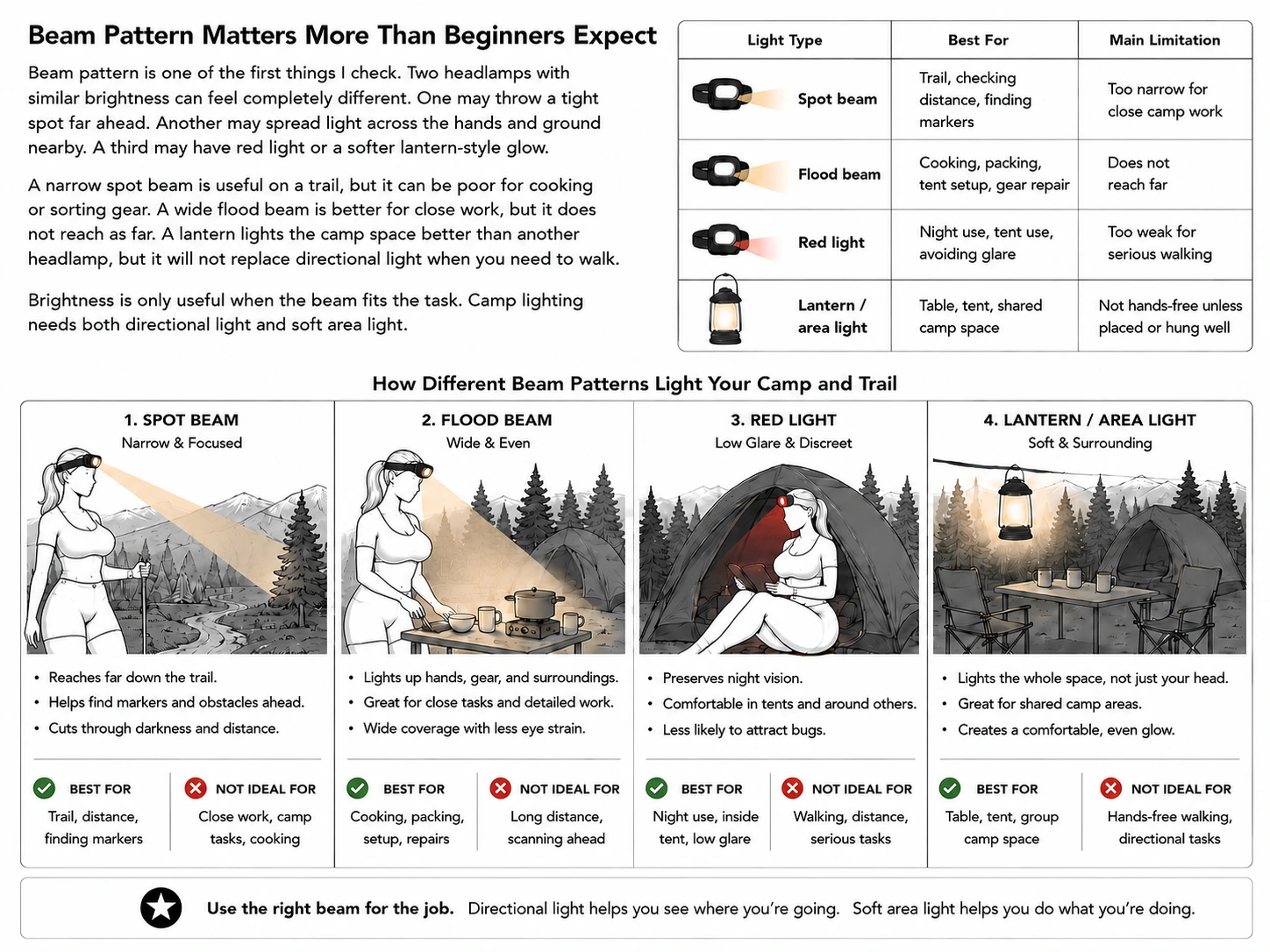
Beam pattern is one of the first things I check. Two headlamps with similar brightness can feel completely different. One may throw a tight spot far ahead. Another may spread light across the hands and ground nearby. A third may have red light or a softer lantern-style glow.
A narrow spot beam is useful on a trail, but it can be poor for cooking or sorting gear. A wide flood beam is better for close work, but it does not reach as far. A lantern lights the camp space better than another headlamp, but it will not replace directional light when you need to walk.
| Light Type | Best For | Main Limitation |
|---|---|---|
| Spot beam | Trail, checking distance, finding markers | Too narrow for close camp work |
| Flood beam | Cooking, packing, tent setup, gear repair | Does not reach far |
| Red light | Night use, tent use, avoiding glare | Too weak for serious walking |
| Lantern / area light | Table, tent, shared camp space | Not hands-free unless placed or hung well |
Headlamp or Lantern: They Solve Different Problems
A headlamp and a lantern should not be treated as interchangeable. A headlamp shines where your head turns. That is useful for movement and hands-free work. It is less useful in a group, because every time you look at another person, the light points toward their face.
A lantern works differently. It creates area light. It can sit on a table, hang inside a tent, or light a small camp kitchen. It is less precise than a headlamp, but much better for shared camp space.
| Camp Task | Better Light | Why |
|---|---|---|
| Walking to water or toilet | Headlamp | Hands-free, directional, follows your eyes |
| Cooking at a table | Lantern + low headlamp | Area light plus task control |
| Setting a tent in the dark | Headlamp | Light follows hands and work area |
| Sitting in camp | Lantern | Less glare for other people |
| Reading in a tent | Low headlamp or small lantern | Needs soft low light |
| Emergency movement | Headlamp | Immediate directional light |
Runtime Is About Useful Modes, Not the Biggest Number
Runtime needs careful reading. A product page may show a long runtime, but that number often belongs to the lowest mode. High or turbo settings may last much less time. That is not automatically a problem, but it matters if you understand how you will use the light.
For camping, I trust a light with useful low and medium modes more than a light that only looks strong at maximum output. Camp light often runs for a while: dinner, gear sorting, walking around the tent, checking a fire area, or getting up at night.
- Battery indicator. It helps prevent surprise failure.
- Efficient low mode. It is often the most-used campsite setting.
- Stable medium mode. It matters more than short bursts of maximum output.
- Power-bank compatibility. It is useful with rechargeable lights.
- Spare batteries or backup light. They matter once the trip is longer than one night.
- Lockout. It prevents the light from turning on inside a pack.
A Balanced Main Headlamp: Petzl ACTIK CORE
Petzl ACTIK CORE fits well as a main headlamp for camping and hiking. Its strongest value is not just brightness. It is the battery system. The headlamp can run on the rechargeable CORE battery and can also use AAA batteries as a backup option.
I like that logic for trips where I do not want to rely on one charging method. The rechargeable battery can be charged at home, while backup AAA batteries can stay in the pack. That is simpler than trying to solve charging problems at night.
The limitation is also clear. I would not choose this model only for waterproof performance. For regular camping, its weather resistance is enough for many users, but for sustained rain, wet travel, or water-heavy trips, I would look more closely at higher water-resistance ratings.
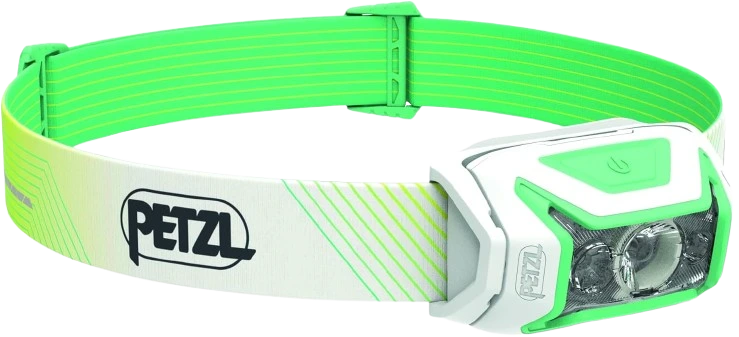
| Brand | Petzl |
|---|---|
| Model | ACTIK CORE |
| Best For | General camping, hiking, camp setup, backup-ready lighting |
| Key Strength | Hybrid battery logic: rechargeable CORE battery plus AAA compatibility |
| Main Limitation | Weather-resistant, but not the most waterproof option in this list |
Battery System: Rechargeable, AAA, or Hybrid
The battery system should match the trip. There is no single correct choice for every camper.
A rechargeable headlamp is convenient for regular use. It can be charged at home, in a vehicle, or from a power bank. It reduces disposable batteries and keeps the routine simple. The weakness is obvious: if you forget to charge it or bring the wrong cable, the light becomes harder to manage.
Replaceable batteries are less elegant, but they are easy to understand. You can bring spares and swap them in the field. The trade-off is that you have to track battery condition, keep spares dry, and avoid carrying dead cells by mistake.
For many camping trips, a hybrid system is the most practical:
- Rechargeable battery for normal use.
- Replaceable batteries as a backup.
- Less dependence on one charging method.
A Rechargeable Weather-Resistant Headlamp: Black Diamond Spot 400-R
Black Diamond Spot 400-R shows a different approach: a rechargeable headlamp focused on regular use, compact design, controls, and weather-focused build. I would not treat it as a backup light. I would treat it as a main rechargeable headlamp for people who manage charging well.
This kind of setup works for short camping trips, regular hiking, car camping, and users who already carry a power bank. The routine is clean: charge the lamp, use it, recharge it after the trip.
The limitation is the same as with most rechargeable-only setups. If the battery is low, you cannot solve the problem by dropping in AAA batteries. For longer trips, I would carry a power bank or a separate backup light.
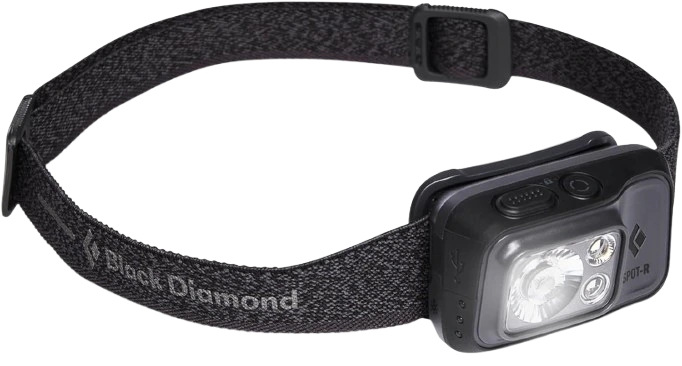
| Brand | Black Diamond |
|---|---|
| Model | Spot 400-R |
| Best For | Regular camping, hiking, wet conditions, rechargeable lighting setups |
| Key Strength | Rechargeable design, compact body, weather-focused build, useful lighting modes |
| Main Limitation | Needs charging; no quick battery swap like AAA-based models |
Comfort, Weight, and Controls Matter at Night
A headlamp can be technically strong and still be irritating to wear. If the front body is heavy, it can press on the forehead. If the strap slips, the light moves every time you bend down. If the buttons are small or confusing, night use becomes slower and more frustrating.
I do not treat comfort as a small detail. Headlamps are often used when the person is tired, cold, or wearing gloves. In those conditions, simple controls can matter more than extra modes.
- Logical buttons. A night light should not need a manual every time.
- Low mode access. It should not force you through a bright mode first.
- Lockout. It prevents battery loss inside a bag.
- Tilt angle. It helps aim light at the hands, ground, or table.
- Stable strap. It should hold the light without pressure or slipping.
An Ultralight Headlamp: Nitecore NU25 MCT UL
Nitecore NU25 MCT UL fits the ultralight side of the category. Its value is not that it replaces every larger headlamp. Its value is that it gives a useful amount of light in a very compact, carry-friendly format.
For backpacking and compact kits, that matters. If pack weight is already being controlled, the headlamp should not feel like a heavy object on the forehead. A small lamp is also easier to keep as a backup or as the main light for short, efficient trips.
The trade-off is size. A small body does not feel like a full-size headlamp, and sustained high-output use should not be overestimated. For camp tasks, careful night movement, and lightweight packing, it is still a strong format.
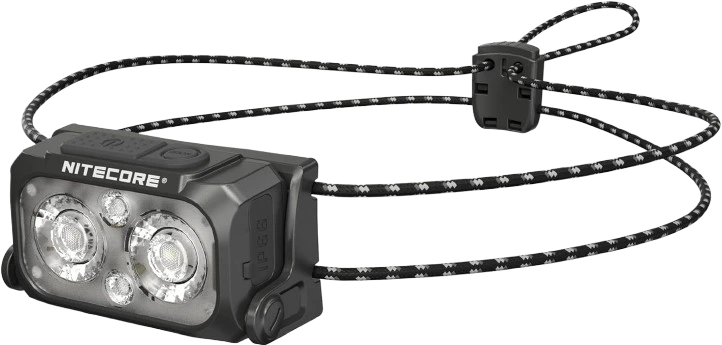
| Brand | Nitecore |
|---|---|
| Model | NU25 MCT UL |
| Best For | Backpacking, ultralight kits, compact carry, backup lighting |
| Key Strength | Very light body, compact carry, multiple light options for close camp use |
| Main Limitation | Small body means compromises in full-size comfort and sustained high-output use |
Red Light and Low Modes Are Not Just Extra Features
Red light can look like a minor feature, but it is useful in camp. It creates less glare, works well inside a tent, and is helpful for small night tasks when you do not want a strong white beam.
It should not be overrated. Red light is not a replacement for normal white light when you need strong visibility, detailed work, or safe movement over uneven ground. I treat it as a quiet night mode, not as the main beam.
Low mode is even more important. A good low mode lets you find gear inside the tent, avoid waking other people, save battery, work close to your hands, and keep your eyes from constantly adjusting between dark and harsh light.
A Budget and Backup Option: GearLight S500 LED Headlamp 2-Pack
GearLight S500 LED Headlamp 2-Pack should not be judged against higher-end technical headlamps. Its role is different: budget lighting, family camping, car-camping kits, and backup use.
This kind of two-pack is useful when you want several simple lights available. One can stay in the car, one can go in a camp box, and one can be handed to another person. A backup light often matters more than beginners expect.
The limitation is refinement. Beam quality, controls, comfort, and build may not feel as polished as more technical outdoor headlamps. I would not make it my first choice for a demanding multi-day trip, but it works as a practical spare or casual-camp option.
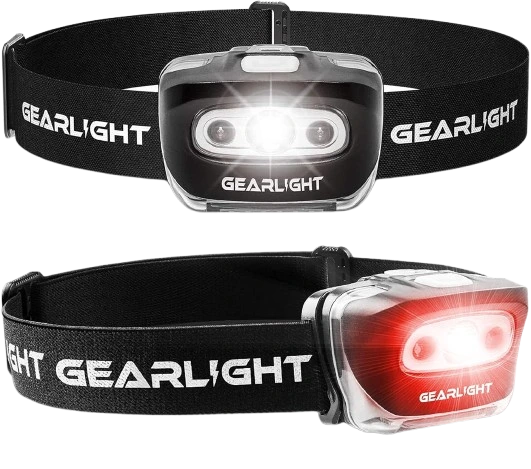
| Brand | GearLight |
|---|---|
| Model | S500 LED Headlamp 2-Pack |
| Best For | Family camping, backup lights, car camping kits, spare headlamps |
| Key Strength | Simple budget-friendly 2-pack with replaceable batteries |
| Main Limitation | Less refined beam, controls, and build than technical outdoor headlamps |
Water Resistance and Durability: What Is Enough for Camping
A camp headlamp does not always need the highest waterproof rating. It does need to handle rain, wet hands, condensation, pack pressure, and normal drops. If a light feels too fragile for damp camp use, I do not trust it as a main light.
For simple camping, splash resistance can be enough. For wet hiking, packrafting, long rain, or very damp trips, I would look more closely at stronger water-resistance ratings. The rating still does not tell the whole story. Battery doors, charging ports, casing, and buttons all matter.
I judge durability through realistic camp questions:
- Can it be used in rain?
- Does the battery door or charging port feel secure?
- Can it turn on accidentally in a pack?
- Does it have lockout?
- Will the body handle normal campsite abuse?
- Is battery replacement or charging simple enough at night?
Camp Lanterns: Soft Area Light Is Often More Useful Than More Lumens
A lantern does not need to behave like a spotlight. Its job is to create soft area light. Around a table, inside a tent, or near a camp kitchen, a diffused glow is usually better than a harsh beam.
A lantern that is too bright can be uncomfortable. It can create sharp shadows, attract insects, and make the camp space feel less settled. For many evening tasks, a lower mode or warmer diffused light is better than maximum output.
I look at a camp lantern through practical details:
- Does it have a useful low mode?
- Is the light soft rather than harsh?
- Can it sit flat on a table?
- Can it be hung inside a tent or near a kitchen area?
- Is the base stable?
- Is the runtime enough for evening use?
- Is the size realistic for the trip?
A Compact Camp Lantern: Black Diamond Moji R+
Black Diamond Moji R+ is a compact rechargeable lantern for a tent, table, or small campsite. I would not treat it as a large base-camp lantern. Its role is small area light that is easy to keep in a camp kit.
The strength is close-range comfort. It helps when you do not want to wear a headlamp all evening. It can sit or hang in a small space and create enough light for a tent or picnic table without turning the area into a glare zone.
The limitation is scale. It is not the right choice for a large group camp or a big cooking area. As a compact lantern, though, it solves a real problem.
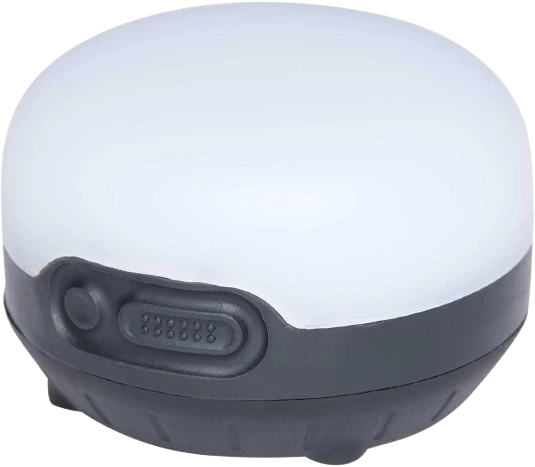
| Brand | Black Diamond |
|---|---|
| Model | Moji R+ |
| Best For | Tent, table, small campsite, compact area light |
| Key Strength | Small rechargeable lantern with soft area lighting |
| Main Limitation | Not a main high-output lantern for large group camps |
A Larger Camp Lantern: BioLite AlpenGlow 250
BioLite AlpenGlow 250 fills a different role. It is not a headlamp and not a pocket light. It is a camp lantern for a table, tent area, or car-camping setup.
This kind of lantern makes sense when the camp routine includes dinner at a table, a small camp kitchen, a family campsite, or a longer evening outside. It creates shared light, so not everyone needs to sit in a headlamp.
The limitation is size. I would not choose it first for ultralight backpacking. For car camping or a simple base camp, it is more useful than adding another strong headlamp.
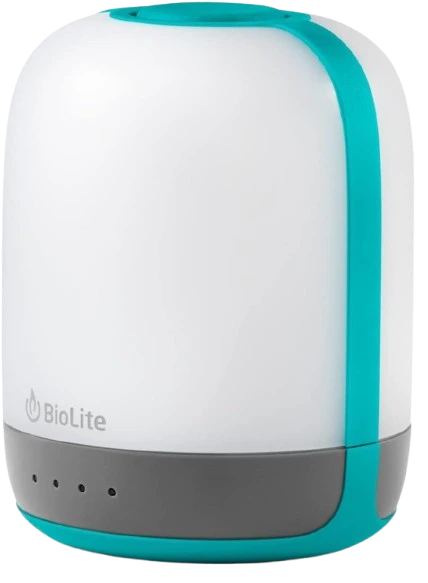
| Brand | BioLite |
|---|---|
| Model | AlpenGlow 250 |
| Best For | Car camping, camp table, tent area, small group campsite |
| Key Strength | Rechargeable area light for shared camp use |
| Main Limitation | Bigger than tiny lanterns and not aimed at ultralight packing |
Simple Camp Lighting Setup
My basic camp lighting setup is simple. I do not want a pile of lights with no clear job. I would rather have a few lights that do not duplicate each other.
- Main headlamp. For walking, cooking, tent setup, packing, and small repairs.
- Small lantern. For the table, tent, camp kitchen, or shared area.
- Backup light or spare battery. If the trip is more than one night, this is not optional.
Product Comparison: Headlamps and Camp Lanterns
This is not a ranking from best to worst. These products show different roles: main headlamp, rechargeable weather-focused headlamp, ultralight headlamp, backup two-pack, compact lantern, and larger camp lantern.
| Product | Type | Best For | Main Strength | Main Limitation |
|---|---|---|---|---|
| Petzl ACTIK CORE | Hybrid headlamp | General camping and hiking | Rechargeable + AAA backup logic | Not the most waterproof option |
| Black Diamond Spot 400-R | Rechargeable headlamp | Wet weather and regular use | Rechargeable, compact, weather-focused | Needs charging |
| Nitecore NU25 MCT UL | Ultralight headlamp | Backpacking and compact kits | Very light and packable | Less full-size comfort |
| GearLight S500 2-Pack | Budget headlamp | Family camping and backup lights | Simple, affordable, replaceable batteries | Less refined beam and controls |
| Black Diamond Moji R+ | Compact lantern | Tent, table, small camp | Soft rechargeable area light | Not a high-output group lantern |
| BioLite AlpenGlow 250 | Camp lantern | Car camping, table, tent area | Better shared camp lighting | Bigger than tiny lanterns |
Common Camp Lighting Mistakes
Camp lighting mistakes usually come from chasing one feature and ignoring the full setup. A bright light can still be annoying. A small light can still be useful. A lantern can be better than another headlamp if the problem is shared camp visibility.
Choosing only by maximum lumens
Maximum brightness does not explain beam quality, runtime, comfort, controls, or battery reliability. High output is useful, but it should not be the only reason to buy a light.
Ignoring low mode
Low mode is often used more than high mode in camp. If low mode is too bright, too weak, or hard to access, the headlamp becomes less pleasant at night.
Using only a headlamp for shared camp light
A headlamp is excellent for hands-free work, but it can annoy other people. Every time you look at someone, the light points at their face. A small lantern solves this better.
Forgetting battery backup
Rechargeable lights are convenient, but they still need a charging plan. For more than one night, I want either a power bank, spare batteries, or a backup light.
Buying a narrow beam for close camp tasks
A tight spot beam can be good on trail and poor at camp. For cooking, packing, sorting gear, or working in a tent, wide flood light is usually more useful.
Ignoring controls
If the button sequence is confusing, it will feel worse at night. Good camp lighting should be easy to use when tired, cold, or half-awake.
No lockout
A headlamp that turns on inside a pack can be dead when needed. Lockout is a small feature, but it can prevent a real problem.
Simple Decision Rule: Choose Light by Task, Not by Maximum Brightness
My rule is simple: I choose camp lighting by the task, not by the biggest lumen number.
If I need to walk, I want a headlamp with a useful beam and reliable runtime. If I need to cook, I want flood light or a lantern. If I need to sit around camp, area light is usually better than everyone wearing a bright headlamp. If the trip is longer than one night, I want a backup or charging plan.
- Start with the task. Walking, cooking, tent use, and shared camp space need different light.
- Check the useful modes. Low and medium modes matter more than the maximum setting for most camp work.
- Plan power before leaving. Rechargeable lights still need backup power, spare batteries, or a second light.
Frequently Asked Questions
How many lumens do I need for camping?
For most camp tasks, low and medium modes matter more than maximum brightness. A stronger mode helps for walking or checking distance, but camp use usually needs controlled, useful light rather than constant high output.
Is a headlamp better than a lantern for camping?
A headlamp is better for walking and hands-free work. A lantern is better for shared camp space, tables, tents, and cooking areas. The best setup often uses both.
Are rechargeable headlamps worth it?
Yes, if you manage charging and carry a power bank or backup light. For longer trips, hybrid models or spare batteries are safer than relying on one charged battery.
Do I need red light on a headlamp?
Red light is useful for low-impact night use, tent use, and avoiding glare around other people. It is not a replacement for white light when you need strong visibility.
What matters more than brightness in a headlamp?
Beam pattern, runtime, comfort, battery system, controls, lockout, water resistance, and low-mode quality usually matter more in real camp use.
Conclusion
A good headlamp is not simply the brightest headlamp. A good camp lighting setup helps with movement, cooking, packing, repairs, sitting, and tent use without making the campsite harder to live in.
For most camping trips, I prefer one reliable headlamp and one small lantern over one oversized light that tries to do everything. The headlamp handles movement and hand work. The lantern makes the campsite more usable for everyone.
The mistake is treating all camp lighting as the same problem. Trail light, task light, tent light, and shared camp light are different jobs. The right setup gives each job the kind of light it actually needs.