
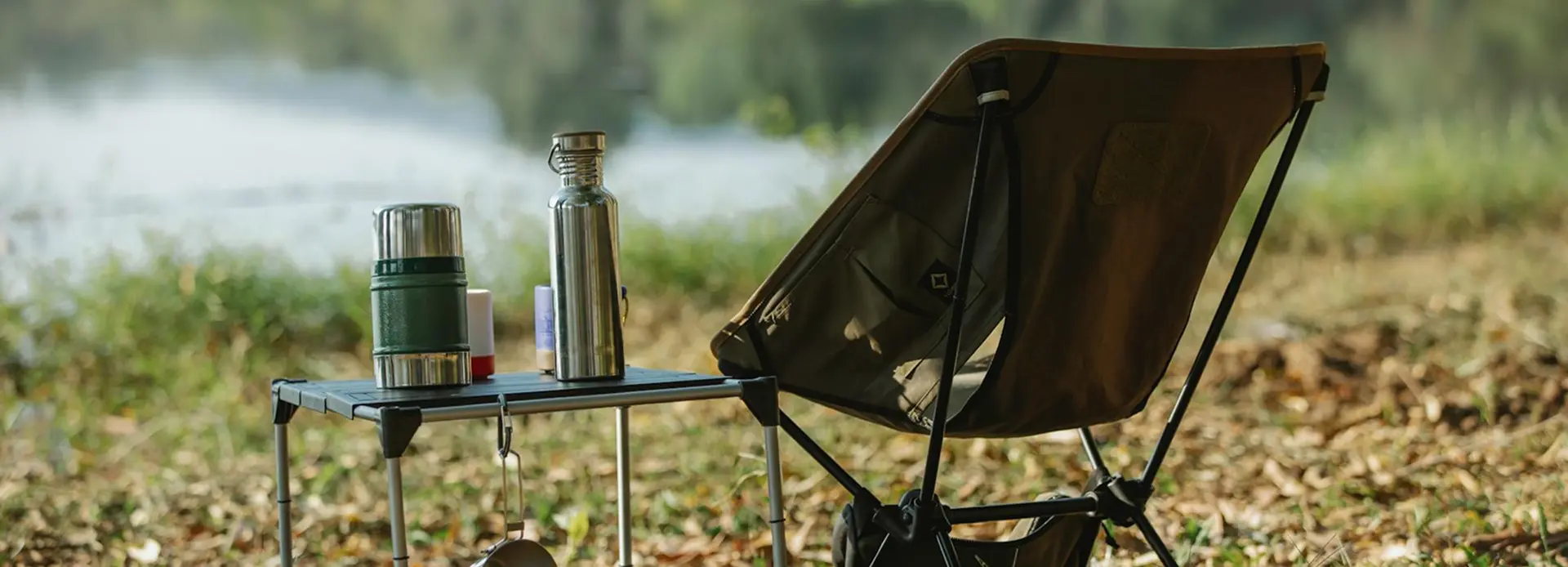
People often choose technical items carefully: a tent, a knife, a backpack, or a sleep system. A camp chair is easier to treat as an afterthought. It folds, it has a cup holder, it looks strong enough, and that seems like enough until the chair is used for more than a few minutes.
I do not look at a camp chair only as a place to sit. At camp, it becomes part of the routine. People eat in it, clean gear, change footwear, sit near the fire, wait for water to boil, read a map, or rest after a route. If the chair is too low, unstable, saggy, or annoying to carry, that shows up quickly.
Comfort is not only padding. A useful camp chair depends on seat height, back angle, fabric tension, seat width, frame shape, feet, packed size, weight, and the way the chair will actually be used. A good car-camping chair can be a poor backpacking chair, and a compact lightweight chair can be a poor choice for long sitting near a camp kitchen.
Quick Answer
For car camping, comfort and stability matter more than minimum weight. For backpacking, packed size and weight matter more, even if the chair sits lower and gives less support. For soft or uneven ground, frame width, foot shape, and ground contact matter more than the weight rating alone. For long sitting, I pay close attention to seat height, back support, fabric tension, and how easy the chair is to get out of. The best camp chair is not the largest or the lightest one. It is the chair that matches the way it will actually be used.
Camp Chair Comfort Is Not Just Padding
A soft seat does not always make a comfortable chair. If the fabric sags too much, the body drops lower than expected, the back rounds, and standing up becomes awkward. Sometimes a firmer, better-tensioned seat gives more useful support than thick padding that collapses under load.
I look at comfort through five things:
- Seat height. How easy it is to sit down and stand up.
- Seat width. Whether the chair feels open enough without the frame pressing into the body.
- Back angle. Whether the posture works for eating, resting, or working near a camp kitchen.
- Fabric tension. Whether the seat supports the body or simply sags.
- Ease of entry and standing. How the chair feels after a long route, in warm layers, or when the legs are tired.
A low chair can be compact and light, but it is not always easy to stand from. A taller chair often feels better around camp, but it usually packs larger and weighs more. A reclined back can feel good for resting and still be inconvenient for eating. A very upright back can become tiring during long sitting. I would rather judge the whole seating position than one feature on a product page.
Match the Chair to the Way You Camp
One camp chair cannot be equally good at everything. Car camping, backpacking, fire-pit sitting, fishing, and family camping all create different demands. The right chair starts with that use case.
| Use Case | Chair Type | What Matters Most | My View |
|---|---|---|---|
| Car camping | Full-size folding chair | Comfort, stability, armrests, storage | Weight matters less if the chair is carried only a short distance. |
| Fire pit / long sitting | Taller chair, rocker, supportive chair | Back support, seat height, relaxed posture | Long sitting comfort matters more than minimum packed size. |
| Backpacking | Compact lightweight chair | Weight, packed size, simple setup | Comfort is more limited, but the chair is realistic to carry. |
| Fishing / rough ground | Stable chair with planted frame | Feet, frame width, low wobble | Stability matters more than extra pockets. |
| Family campsite | Durable quad chair | Price, easy setup, cup holders, repeat use | Practicality often matters more than technical design. |
Seat Height, Back Angle, and Support Matter More Than People Expect
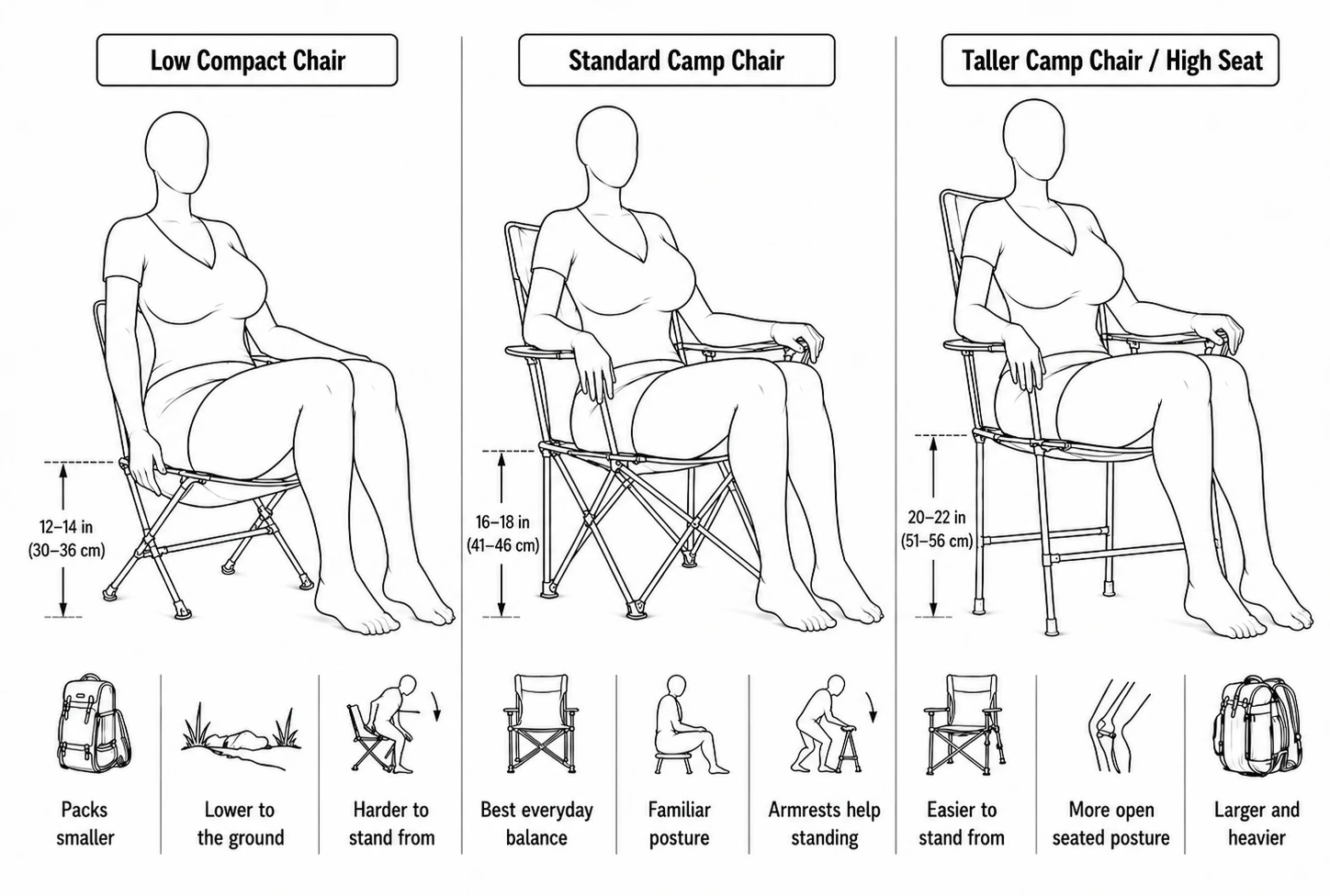
Seat height changes how a chair feels in daily camp use. A low compact chair can be fine for short breaks, but it is harder to stand from. That matters after a long walk, in cold weather, or when the legs are already tired.
A standard camp chair usually gives the best balance for casual camping: the seat is not too low, armrests help with standing, and the posture feels familiar. Taller chairs and big-and-tall models can be better for people who want an easier standing motion, but they are also larger and heavier.
Back angle also matters. A chair that leans too far back may be comfortable for resting and awkward for eating or working at a small table. A chair that sits too upright may feel stiff after a while. For a regular camp chair, I am not looking for sofa softness. I am looking for useful support.
A Basic Full-Size Chair: Coleman Portable Camping Chair with 4-Can Cooler
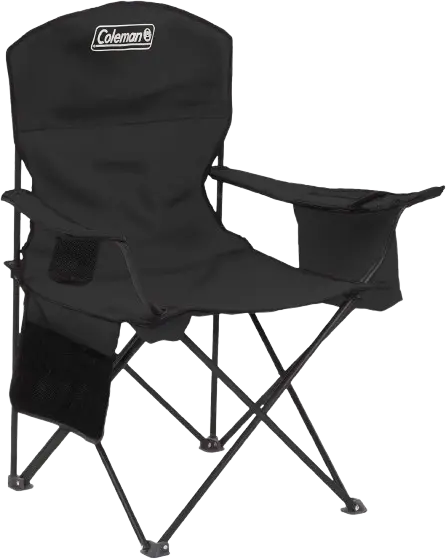
The Coleman Portable Camping Chair with 4-Can Cooler is a good example of a basic full-size camp chair for car camping. I would not treat it as a lightweight chair or a backpacking option. Its job is simpler: provide a familiar, comfortable seat when the chair does not need to be carried far.
This kind of chair makes sense for family camping, tailgating, short campsite use, and fire-pit sitting. The armrests, cup holder, side pocket, and small built-in cooler are not essential, but they are practical in camp. A water bottle, phone, gloves, headlamp, or small item has somewhere to go instead of lying on the ground.
The limitation is clear. This is not a chair for carry-heavy trips. If the walk from the car to the campsite is short, it can be useful. If the chair needs to be carried for miles, this format becomes too bulky.
| Brand | Coleman |
|---|---|
| Model | Portable Camping Chair with 4-Can Cooler |
| Best For | Car camping, tailgating, fire pit, casual campsite sitting |
| Key Strength | Full-size comfort, armrests, cup holder, side pocket, built-in small cooler |
| Main Limitation | Too bulky for backpacking or long carrying |
Stability Comes From the Frame, Feet, and Ground Contact
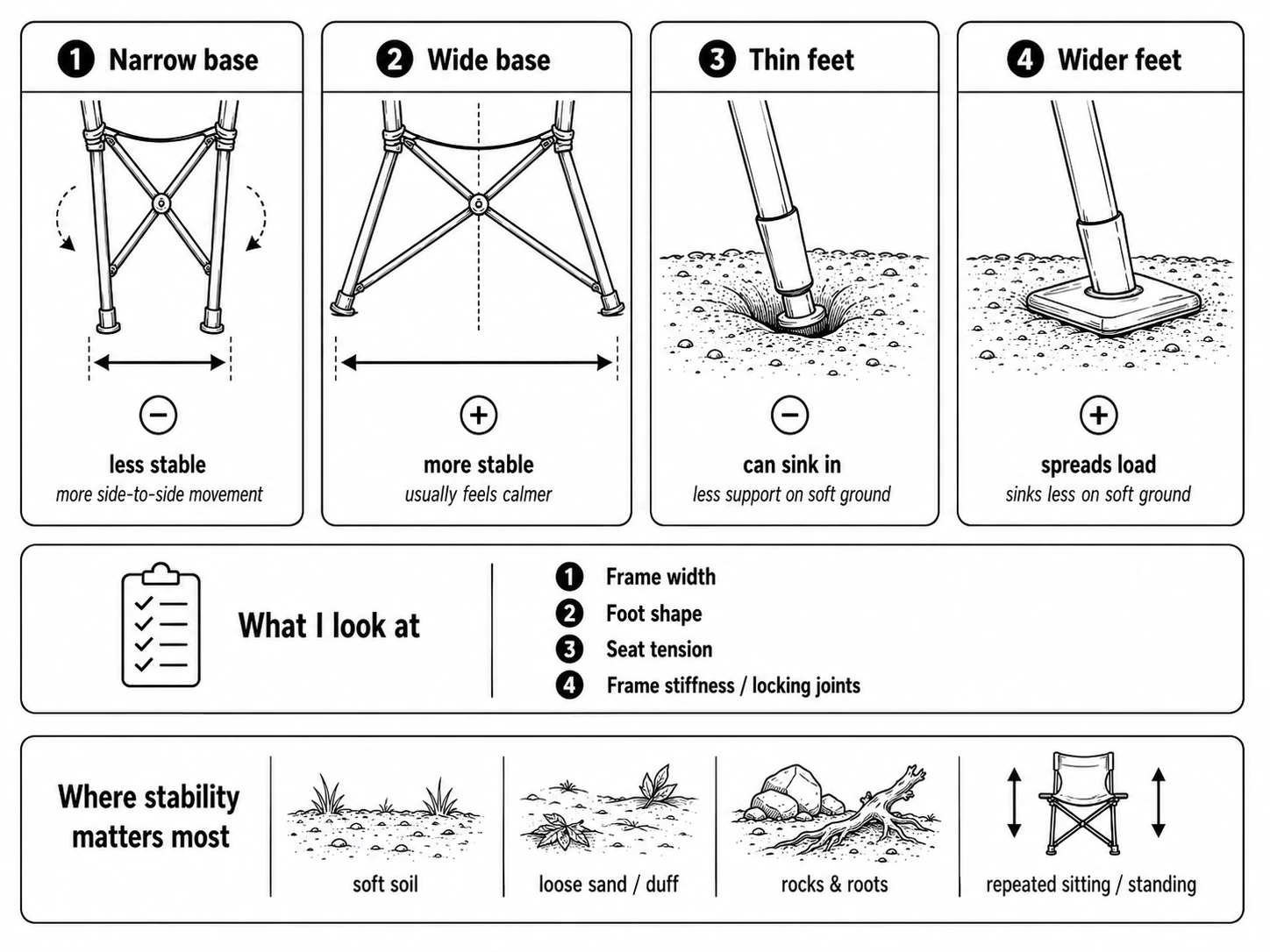
Camp chair stability is not only about the weight rating. Two chairs can claim similar capacity and feel very different on real ground. Frame width, foot shape, frame stiffness, ground contact, and fabric tension all affect how planted the chair feels.
Thin feet can sink into soft soil. A narrow base can wobble on uneven ground. A low compact chair can become awkward on rocks or roots even if the frame itself is strong. If the chair is used near a fire pit, around a camp kitchen, or during repeated sitting and standing, stability becomes more important than small convenience features.
I look at stability through four things:
- Frame width. A wider base usually feels calmer and less twitchy.
- Feet shape. Wider feet help on soft or loose ground.
- Seat tension. A saggy seat can change the center of balance.
- Locking mechanism. A locked-open frame can feel more predictable.
A More Stable Folding Chair: Kijaro Dual Lock Portable Camping Chair
The Kijaro Dual Lock Portable Camping Chair is useful as an example of a chair where the main value is not minimum weight. It is about a more stable seated feel. The dual-lock design helps the chair stay fixed when open, and the seat tends to feel more tensioned than many simple quad chairs.
That matters if someone dislikes the sinking feeling of a loose fabric seat. A better-tensioned seat can make sitting more supportive and standing easier. This type of chair also makes sense for longer campsite sitting, events, and car camping where comfort matters more than packed size.
I would not describe it as compact. It is heavier and bulkier than lightweight chairs. But for stable campsite seating, the structure is part of the point.
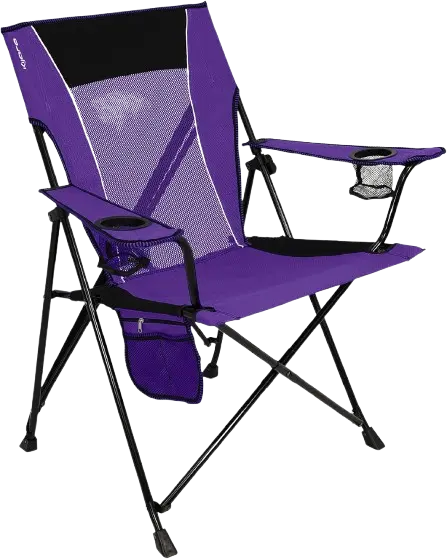
| Brand | Kijaro |
|---|---|
| Model | Dual Lock Portable Camping Chair |
| Best For | Stable campsite seating, car camping, long sitting, events |
| Key Strength | Dual-locking mechanism, better seat tension, stable full-size feel |
| Main Limitation | Heavier and bulkier than compact backpacking chairs |
Rocking Chairs and Long Sitting Comfort
Rocking camp chairs have their own logic. They are not necessary for every campsite, but they can be very comfortable for long sitting near a fire, at a base camp, or beside a car-camping setup. The small rocking motion can make a chair feel less static during long use.
A rocker is not universal, though. It needs suitable ground. On very uneven soil, rocks, roots, or soft sand, the rocking mechanism may feel less useful. Rockers also tend to be too bulky for backpacking and too specialized for trips where the chair has to move often.
I would choose a rocking chair only when the chair will mostly stay near camp. If the chair needs to be carried often, set up on rough ground, or packed into limited space, a simpler structure is usually better.
A Rocking Camp Chair: GCI Outdoor Freestyle Rocker
The GCI Outdoor Freestyle Rocker is a good example of a chair built for long campsite sitting. Its strength is not carry weight. Its strength is comfort around camp: near a fire pit, while waiting for food, or during a relaxed evening after a route.
The rocker format makes sense if someone actually likes to sit for long periods. I would not buy it as a just-in-case chair. But if a chair is one of the main comfort items at camp, the rocking function can matter more than another pocket or small extra feature.
The limitation is ground and packed size. On a suitable campsite it works well. On rough ground or for long carrying, I would choose another chair type.
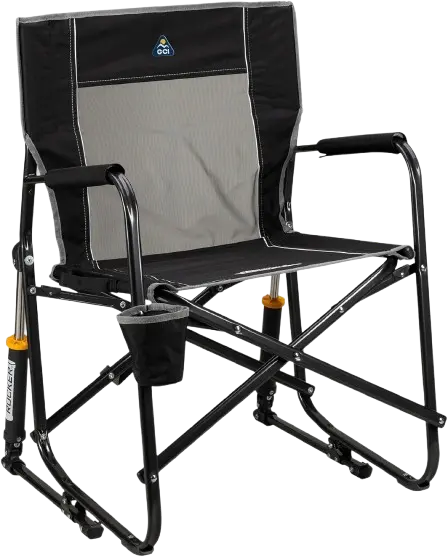
| Brand | GCI Outdoor |
|---|---|
| Model | Freestyle Rocker |
| Best For | Fire pit, car camping, long relaxed sitting, base camp use |
| Key Strength | Rocking comfort and relaxed campsite seating |
| Main Limitation | Not for backpacking and not ideal on rough uneven ground |
Packed Size and Weight Decide Whether the Chair Is Worth Carrying
A camp chair can be comfortable and still stay at home if it is annoying to move. This is the main difference between car-camping chairs and lightweight chairs.
For car camping, a heavier chair can be acceptable if it only moves from the trunk to the campsite. For backpacking, that same weight is a completely different problem. A few extra pounds are noticeable when the pack already holds shelter, sleep system, food, water, and clothing.
Compact chairs are usually lower, narrower, and less supportive than full-size models. Their advantage is different: they can actually fit into a compact carry system. This is where honesty matters. If the chair is for a hiking route, evaluate it as part of total load. If the chair is for a campsite near the car, do not force an ultralight chair into a job where a full-size chair would be better.
A Compact Lightweight Chair: Helinox Chair One
The Helinox Chair One is a useful example of a compact lightweight chair. It shows the other side of the buying decision: not maximum campsite comfort, but low packed size and realistic carrying.
This kind of chair makes sense for backpacking, bikepacking, compact camping setups, and trips where space and weight genuinely matter. It does not feel like a full-size quad chair. The seat is lower, there are no armrests, and the lounge comfort is limited. In exchange, it is much easier to pack and carry.
I would not buy a compact chair only because it looks more technical. For car camping, a larger chair may be cheaper and more comfortable. A compact chair is worth it when compactness is a requirement, not a bonus.
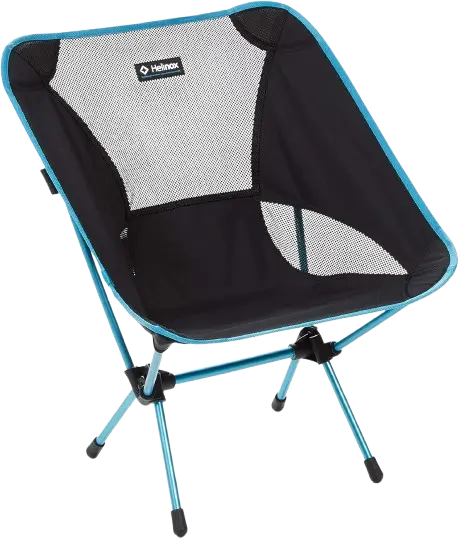
| Brand | Helinox |
|---|---|
| Model | Chair One |
| Best For | Backpacking, compact camping setups, carry-limited trips |
| Key Strength | Very packable, lightweight, strong for its size |
| Main Limitation | Low seat, less support, higher price than basic camp chairs |
Heavy-Duty Chairs: When Bigger and Stronger Makes Sense
Heavy-duty camp chairs are not necessary for everyone. They make sense when the user needs a wider seat, a stronger frame, higher stated capacity, or a more planted feel during frequent campsite use.
These chairs often use steel frames, heavier fabric, wider armrests, larger storage pockets, and a larger overall structure. That can be excellent for car camping and poor for carrying. A heavy-duty chair can be very comfortable beside a fire pit and completely impractical in a backpacking setup.
I would consider a heavy-duty chair in these cases:
- Wider seating is needed. A standard chair feels narrow or cramped.
- More stable sitting is important. The chair will be used often and for long sessions.
- The chair is not carried far. Packed size and weight are not the main limits.
- Frame support matters. Strength and campsite comfort are more important than compact packing.
A Heavy-Duty Camp Chair: ALPS Mountaineering King Kong Chair
The ALPS Mountaineering King Kong Chair is a clear heavy-duty example. The value is strength and stability, not compact carry. I would use it for car camping, base camp, long sitting, or situations where a wider and more substantial chair is useful.
The strong points are the frame, fabric, width, and general sense of reserve. Chairs like this often include cup holders, side pockets, and more seating space. Those details can matter in camp because the chair gets used many times each day.
The main drawback is weight and packed size. A short carry from the car is reasonable. A long carry is not where this chair belongs.
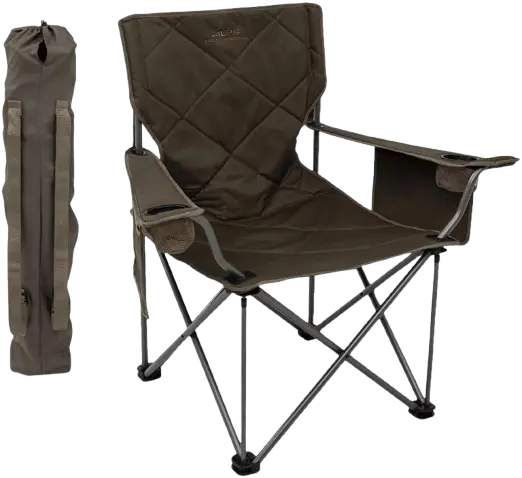
| Brand | ALPS Mountaineering |
|---|---|
| Model | King Kong Chair |
| Best For | Car camping, larger users, long campsite use, heavy-duty seating |
| Key Strength | Strong frame, wide structure, durable fabric, high-capacity design |
| Main Limitation | Heavy and bulky; not suitable for long carrying |
Oversized Chairs and Easier Standing
Oversized chairs and big-and-tall models are close to heavy-duty chairs, but the use case is slightly different. They often provide a wider seat, higher sitting position, larger feet, and easier standing. For some people, that matters more than compact packing.
A higher seat can be useful after a long day. A low chair may look comfortable in a photo, but standing from it can be difficult when the knees are tired or when the user is wearing warm layers. A taller chair can work better for eating, changing shoes, and general campsite routine.
The trade-off is size. An oversized chair needs room in the car, storage space at home, and a reasonable carry distance to camp. If that is ignored, a comfortable chair can become irritating before it is even opened.
A Big-and-Tall Option: Coleman Big-N-Tall Camping Chair
The Coleman Big-N-Tall Camping Chair is a useful oversized example. Its logic is not only higher capacity. It also offers a wider and higher seating format for people who find standard quad chairs too narrow or too low.
I would consider this kind of chair for car camping, family campsites, fishing, tailgating, or situations where the user sits often and wants easier standing. Larger feet can also help on softer ground, although they do not make the chair perfect for every surface.
The limitation is packed size. This is not a chair for long carrying. If the car has space and comfort matters more than compactness, the big-and-tall format can be practical.
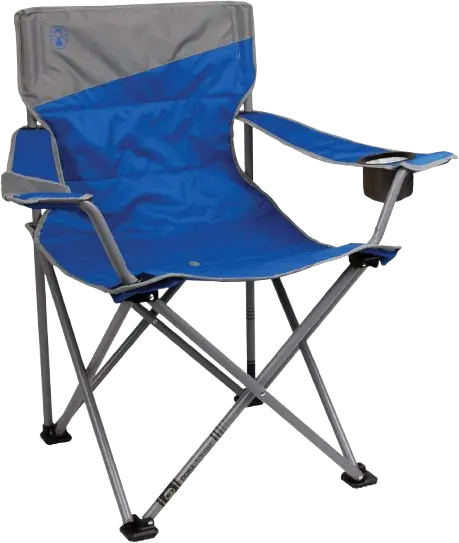
| Brand | Coleman |
|---|---|
| Model | Big-N-Tall Camping Chair |
| Best For | Wider seating, easier standing, high-capacity campsite use |
| Key Strength | Oversize seat, larger feet, higher seat position, stronger full-size format |
| Main Limitation | Large packed size; best for car camping, not carrying far |
Materials, Fabric Tension, and Ventilation
Materials should not be judged separately from construction. A steel frame can be stable and durable, but it adds weight. An aluminum frame is lighter, but the final feel still depends on frame shape and joint quality. Mesh panels work well in warm weather, but they may not feel as structured as heavier fabric.
Fabric tension matters more than it seems. If the seat sags early, the chair can become less comfortable even when the frame is still fine. Too soft can feel pleasant at first and weak over time. Too firm can become uncomfortable during long sitting. A good chair finds a usable balance.
| Feature | What It Helps With | Trade-Off |
|---|---|---|
| Mesh panels | Ventilation in warm weather | Less warmth and sometimes less structure |
| Steel frame | Stability and durability | More weight |
| Aluminum frame | Lighter carry | Can feel less planted depending on design |
| Wide feet | Better soft-ground stability | More packed bulk |
| Tensioned seat | Better support and easier standing | Less soft lounge feel |
Product Comparison: Six Camp Chair Examples
This is not a ranking from best to worst. These chairs show different types: basic full-size, locking, rocker, compact, heavy-duty, and oversized. They should not be judged by one standard because they solve different problems.
| Chair | Type | Best For | Main Strength | Main Limitation |
|---|---|---|---|---|
| Coleman Portable Camping Chair with 4-Can Cooler | Basic cushioned quad chair | Car camping, tailgating, fire pit | Cushioned seat, cooler, pockets, familiar full-size format | Bulky for real carrying |
| Kijaro Dual Lock Portable Camping Chair | Locking folding chair | Stable campsite seating | Locked-open feel and better seat tension | Heavier than compact chairs |
| GCI Outdoor Freestyle Rocker | Rocking camp chair | Fire pit, long relaxed sitting | Rocking comfort on suitable ground | Not for backpacking or rough uneven ground |
| Helinox Chair One | Compact lightweight chair | Backpacking, compact packing | Very light and packable | Low seat and less full-size support |
| ALPS Mountaineering King Kong Chair | Heavy-duty chair | Car camping, larger users, long campsite use | Strong frame, wide structure, high-capacity design | Heavy and bulky |
| Coleman Big-N-Tall Camping Chair | Oversized quad chair | Wider seating, easier standing, high-capacity use | Oversize seat, larger feet, higher seat position | Large packed size |
Common Camp Chair Mistakes
Camp chair mistakes usually come from choosing by one feature instead of the whole use case. A chair can be soft but unstable, strong but too heavy, compact but too low, or wide but annoying to pack.
Choosing only by softness
A soft seat can feel good for the first minute and still be poor for longer sitting. If the fabric sags too much, support gets worse and standing up becomes harder.
Ignoring seat height
Low chairs pack smaller, but they are not always comfortable. If getting in and out of the chair feels awkward, the packed size advantage may not matter.
Buying a heavy chair for carry-heavy trips
A full-size camp chair is fine near a car. It becomes a problem if the trip requires real walking with gear. Weight and packed size should match the carry distance.
Trusting weight capacity too much
Weight capacity does not explain the whole stability picture. Frame shape, feet, fabric tension, and ground contact matter just as much in real camp use.
Forgetting packed size
A comfortable chair still needs to fit into the car, storage space, camp box, or pack system. If it is always annoying to pack, it will be used less.
Using the wrong chair on soft ground
Thin feet can sink into sand, soft soil, or wet ground. A chair that feels stable on a patio may feel very different at camp.
Simple Decision Rule: Choose the Chair for the Place It Will Actually Sit
My rule is simple: I choose a camp chair by the place where it will spend most of its time, not by the longest feature list.
If the chair will stay near the car, I put comfort, seat height, stability, and armrests above weight. If the chair has to fit into a backpacking setup, I start with packed size and weight. If the chair is mainly for fire-pit sitting, I look at long sitting comfort, back support, and height. If the ground is often soft or uneven, I look at frame shape and feet.
- Start with the campsite use. Car camping, backpacking, fire pit, fishing, and family camping need different chairs.
- Check seat height before features. If the chair is hard to get out of, cup holders and pockets will not fix it.
- Match comfort to carry distance. The more you carry the chair, the more weight and packed size matter.
Frequently Asked Questions
What makes a camp chair comfortable?
Seat height, back angle, fabric tension, seat width, and ease of standing matter more than padding alone. A chair should support the body without sagging too much or forcing an awkward posture.
Are lightweight camp chairs worth it?
Yes, if you need to carry the chair far or pack it into a compact setup. For car camping, a heavier full-size chair is often more comfortable and more practical.
What is the best seat height for a camp chair?
There is no single best height. Lower chairs pack smaller but are harder to stand from. Standard or taller chairs usually feel better for long campsite sitting, eating, and getting in and out repeatedly.
Are rocking camp chairs good for camping?
They can be very comfortable near a fire pit or on level ground. They are usually too bulky for backpacking and may feel less stable on rough or uneven surfaces.
Should I buy a heavy-duty camp chair?
Only if you need the extra width, stronger frame, higher seat, or higher capacity. For short walks from the car, heavy-duty chairs can be practical. For backpacking, they are usually too bulky.
Conclusion
A good camp chair is not just a place to sit. It has to match how camp actually works: how far the chair is carried, how long it is used, what ground it stands on, and how easy it is to sit down and stand up.
For car camping, I would rather use a stable full-size chair than the lightest possible one. For backpacking, I would accept less lounge comfort to keep weight and packed size under control. For long sitting near a fire pit, a rocker or more supportive chair can make sense. For larger users or frequent campsite use, heavy-duty and oversized chairs may be worth the bulk.
The mistake is treating all camp chairs as the same category. They are not. A compact chair, a basic quad chair, a rocker, and a heavy-duty chair solve different problems. The right one is the chair that fits the trip, the ground, the carry distance, and the way you actually sit at camp.